
 June 22, 2026
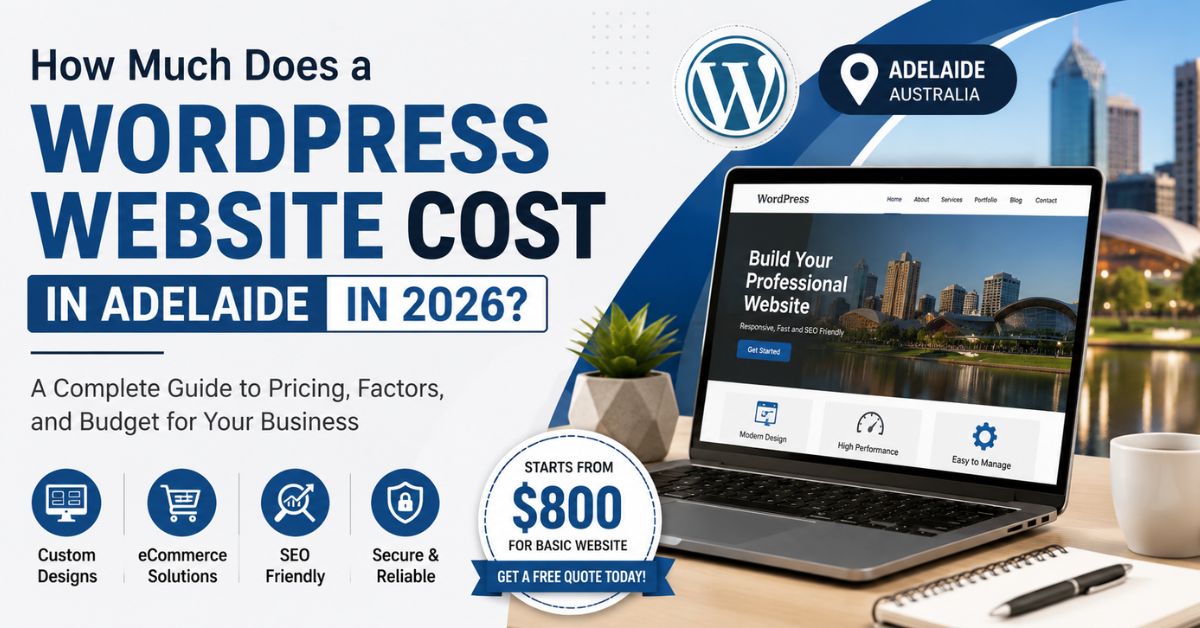
How Much Does a WordPress Website Cost in Adelaide
A professional website is no longer optional for businesses in Adelaide. Whether you run a local café, tradie service, medical clinic, accounting firm, eCommerce store, or corporate company, your website is often the first impression customers have of your business. WordPress remains the most popular website platform in 2026 because of its flexibility, affordability, SEO capabilities, and ease of management.
However, one of the most common questions business owners ask is: How much does a WordPress website cost in Adelaide in 2026?
The answer depends on several factors, including the type of website, design requirements, functionality, content creation, SEO, hosting, and ongoing maintenance. In this guide, we’ll break down the expected costs and explain what influences pricing so you can make an informed decision.
Why WordPress Continues to Dominate in 2026
WordPress powers over 40% of websites worldwide, and its popularity continues to grow because it offers:
- Customisable designs
- SEO-friendly structure
- Thousands of plugins and integrations
- Mobile responsiveness
- Easy content management
- Scalability for future growth
- Cost-effective development
Businesses in Adelaide prefer WordPress because it allows them to start small and expand their websites as their businesses grow.
Average WordPress Website Costs in Adelaide in 2026
The cost of a WordPress website in Adelaide varies significantly depending on complexity.
| Website Type | Estimated Cost |
| Basic Starter Website | $400 – $500 |
| Small Business Website | $500-$700 |
| Professional Corporate Website | $700-$1200 |
| Custom WordPress Website | $1200 – $1500+ |
| WooCommerce eCommerce Store | $1500 – $2000+ |
Factors That Influence WordPress Website Costs in Adelaide
The cost of a WordPress website in Adelaide can vary significantly depending on several factors. While some small business websites may require only a modest investment, more advanced websites with custom features and eCommerce capabilities can cost substantially more. Understanding these factors helps businesses set realistic budgets and choose the right solution for their needs.
1. Website Design Requirements
The complexity of your website design is one of the biggest factors affecting cost. A template-based design is generally more affordable, while a fully custom design requires more time and expertise. Businesses looking for unique branding, custom layouts, and premium user experiences should expect higher development costs.
2. Number of Pages
A five-page website will naturally cost less than a website with twenty or more pages. Additional service pages, landing pages, blogs, and location pages increase the amount of design, development, and content creation required, which impacts the overall price.
3. Custom Features and Functionality
Websites that require special functionality usually involve higher costs. Features such as online booking systems, membership portals, customer dashboards, calculators, quote forms, and CRM integrations require additional development and testing.
4. eCommerce Functionality
Adding WooCommerce or other eCommerce capabilities increases website costs. Product pages, payment gateways, shipping settings, inventory management, and customer account features all contribute to a larger development budget.
5. Content Creation and Copywriting
High-quality content is essential for both user engagement and SEO. Businesses that require professionally written content, blog articles, service pages, and SEO copywriting should include these expenses in their website budget.
6. Search Engine Optimisation (SEO)
SEO setup can influence the total cost of a WordPress website. Proper keyword research, optimised page titles, meta descriptions, image optimisation, internal linking, and technical SEO all require additional work but help improve search engine visibility and long-term online success.
7. Responsive Mobile Design
Modern websites must function perfectly across desktops, tablets, and smartphones. Creating a responsive design that delivers a seamless experience on all devices requires additional testing and optimisation, which can affect development costs.
8. Premium Themes and Plugins
Although WordPress itself is free, many websites rely on premium themes and plugins for enhanced functionality. SEO tools, security plugins, backup solutions, booking systems, and page builders often come with annual licensing fees that contribute to overall website costs.
9. Hosting and Domain Registration
Ongoing expenses such as web hosting and domain registration should also be considered. Businesses may choose shared hosting for affordability or managed WordPress hosting for improved speed, security, and support.
10. Website Maintenance and Support
Regular updates, backups, security monitoring, and technical support are essential for maintaining a secure and high-performing website. Many Adelaide businesses invest in monthly maintenance plans to ensure their websites remain reliable and up to date.
11. Third-Party Integrations
Integrating external platforms such as email marketing software, payment gateways, CRMs, chat systems, and analytics tools can increase development complexity and overall project costs.
12. Experience of the Web Developer or Agency
The expertise and reputation of the developer or agency you choose will also affect pricing. Experienced WordPress professionals often charge more, but they typically deliver higher-quality websites with better performance, security, and long-term support.
Ultimately, the cost of a WordPress website in Adelaide depends on your specific business goals, required features, and future growth plans. Investing in a professionally designed and optimised website can provide long-term value by improving brand credibility, attracting customers, and generating more leads.
Hidden Costs Businesses Should Consider When Developing a WordPress Website in Adelaide
When budgeting for a WordPress website, many Adelaide businesses focus only on the upfront development cost. However, several hidden expenses can arise during and after the project. Understanding these additional costs can help you avoid surprises and ensure your website remains secure, functional, and effective in the long run.
1. Domain Name Registration
A domain name is an ongoing expense that must be renewed annually. Depending on the extension (.com.au, .com, etc.), domain registration typically costs between $15 and $50 per year. Premium domains may cost significantly more.
2. Web Hosting Fees
Your website needs reliable hosting to stay online and perform efficiently. Shared hosting may be affordable, but growing businesses often require managed WordPress hosting or VPS hosting for better speed, security, and support. Hosting costs can range from $10 to several hundred dollars per month.
3. Premium Themes and Plugins
Although WordPress is free, many advanced features rely on premium themes and plugins. SEO tools, page builders, security plugins, booking systems, and backup solutions often require annual subscriptions that add to the overall cost.
4. Professional Content Writing
Creating quality content is often overlooked during budgeting. Professionally written service pages, blogs, and landing pages improve search engine rankings and conversions but may involve additional costs, especially if SEO copywriting is required.
5. Photography and Graphic Design
Stock images can only go so far. Businesses often need professional photography, custom graphics, logos, banners, and branded visuals to create a more polished and trustworthy online presence.
6. Search Engine Optimisation (SEO)
A website without SEO may struggle to generate traffic. Technical SEO setup, keyword research, on-page optimisation, and ongoing SEO campaigns are separate investments that many businesses underestimate when planning their website budget.
7. Website Maintenance and Updates
WordPress websites require regular updates to plugins, themes, and core files. Ongoing maintenance helps protect against security vulnerabilities and ensures the website performs smoothly. Many businesses invest in monthly maintenance plans to avoid unexpected technical issues.
8. Security and Backup Solutions
Cybersecurity is increasingly important in 2026. Premium security software, malware monitoring, SSL certificates, and automated backup systems may involve additional recurring expenses but are essential for protecting business data and customer information.
9. Email Hosting
Professional email addresses such as info@yourbusiness.com.au often require separate email hosting services. Platforms like Microsoft 365 and Google Workspace involve monthly subscription fees that should be included in your overall budget.
10. Third-Party Integrations
Connecting your website with external systems such as CRM software, payment gateways, email marketing platforms, accounting software, or booking systems can increase development complexity and ongoing subscription costs.
11. Additional Functionality Requests
Many businesses add new requirements after the project begins. Features like live chat, customer portals, online booking systems, membership areas, or custom calculators can increase development time and cost.
How Long Does a WordPress Website Take?
One of the most common questions businesses in Adelaide ask before starting a website project is, “How long will it take to build my WordPress website?” The answer depends on the size, complexity, and functionality required. While a simple website can be completed within a couple of weeks, larger and more customised projects may take several months.
Here is a general timeline for different types of WordPress websites.
1. Basic WordPress Website (1–3 Weeks)
A simple website with 5 to 10 pages can usually be completed within one to three weeks. These websites typically include essential pages such as Home, About, Services, Blog, and Contact. If the content, images, and branding materials are readily available, development can be completed quickly.
2. Small Business Website (2–5 Weeks)
Small business websites often require additional service pages, contact forms, SEO setup, and mobile optimisation. The timeline also depends on how quickly content and feedback are provided during the design and revision stages.
3. Professional Corporate Website (4–8 Weeks)
Corporate websites usually involve custom designs, more pages, advanced layouts, and detailed content creation. Features such as team pages, case studies, lead generation forms, and custom graphics may increase the overall development time.
4. WooCommerce eCommerce Website (4–12 Weeks)
Online stores require significantly more setup compared to standard websites. Product uploads, category organisation, payment gateway integration, shipping settings, and customer account functionality all contribute to a longer development process. Larger stores with hundreds of products may require additional time.
5. Custom WordPress Website (2–6 Months)
Websites with unique functionality such as booking systems, customer portals, membership platforms, online courses, or CRM integrations involve custom development and extensive testing. These projects often require multiple phases and therefore take longer to complete.
Typical WordPress Website Development Process
Most WordPress projects follow these stages:
- Planning and Discovery – 2 to 5 days.
- Design and Layout Creation – 1 to 2 weeks.
- Website Development – 1 to 4 weeks.
- Content Upload and SEO Setup – Several days to 2 weeks.
- Testing and Revisions – 3 to 7 days.
- Website Launch – 1 to 2 days.
Can a Website Be Built Faster?
Yes. If all content, images, and branding assets are prepared in advance, a basic WordPress website can often be completed within one week. However, rushing the process may compromise quality, user experience, and SEO performance. Taking the time to plan and test properly usually results in a more successful website.
Should You Build the Website Yourself?
DIY website builders and WordPress templates make it possible for business owners to create websites themselves.
However, DIY websites often face challenges such as:
- Poor design quality
- Slow loading speeds
- Weak SEO performance
- Security vulnerabilities
- Limited scalability
While DIY solutions may save money initially, many businesses eventually hire professionals to redesign and optimise their websites.
For businesses serious about growth, professional WordPress development often provides a much better return on investment.
Choosing the Right WordPress Developer in Adelaide
When selecting a website developer, consider the following:
- Portfolio: Review previous projects to assess design quality and functionality.
- Experience: Choose developers with proven WordPress expertise and experience in your industry.
- SEO Knowledge: A website should be built with search engine visibility in mind from day one.
- Ongoing Support: Ask whether maintenance, updates, and technical support are available after launch.
- Transparent Pricing: Avoid vague quotes. A professional developer should clearly outline what is included in the project.
Is a WordPress Website Worth the Investment?
For most Adelaide businesses, the answer is yes.
A professionally built WordPress website can:
- Generate leads
- Increase sales
- Build credibility
- Improve customer trust
- Support marketing campaigns
- Enhance local search visibility
Unlike traditional advertising, a website works for your business 24 hours a day, seven days a week.
When viewed as a long-term business asset, a professionally developed WordPress website often delivers one of the highest returns on investment available to small and medium-sized businesses.
Final Thoughts
The cost of a WordPress website in Adelaide in 2026 depends on your business goals, design requirements, functionality needs, and ongoing marketing strategy.
While a basic website may cost as little as $400–$700, most professional business websites fall between $700 and $1,500+, with eCommerce and custom solutions costing significantly more.
Rather than focusing solely on the lowest price, businesses should consider the value a website provides. A well-designed, SEO-friendly, and professionally maintained WordPress website can become one of the most powerful tools for attracting customers and growing a business in Adelaide’s increasingly competitive digital marketplace.
 9708 043 170
 PWS Admin
 25 Sep 2026